What it can feel like
- A dull ache or stiffness that is worse after sitting, driving or sleeping
- Sharp pain when you bend, twist, lift or turn your head
- Muscle spasm or a "locked" feeling in the neck or lower back
- Pain that spreads into the shoulders, between the shoulder blades or into the buttocks
Common causes
Long hours at a desk or on a phone, a sudden awkward movement, lifting, poor sleep posture, stress and old injuries all play a part. Sometimes a disc or nerve is involved, which is why we always check before treating.
How we help
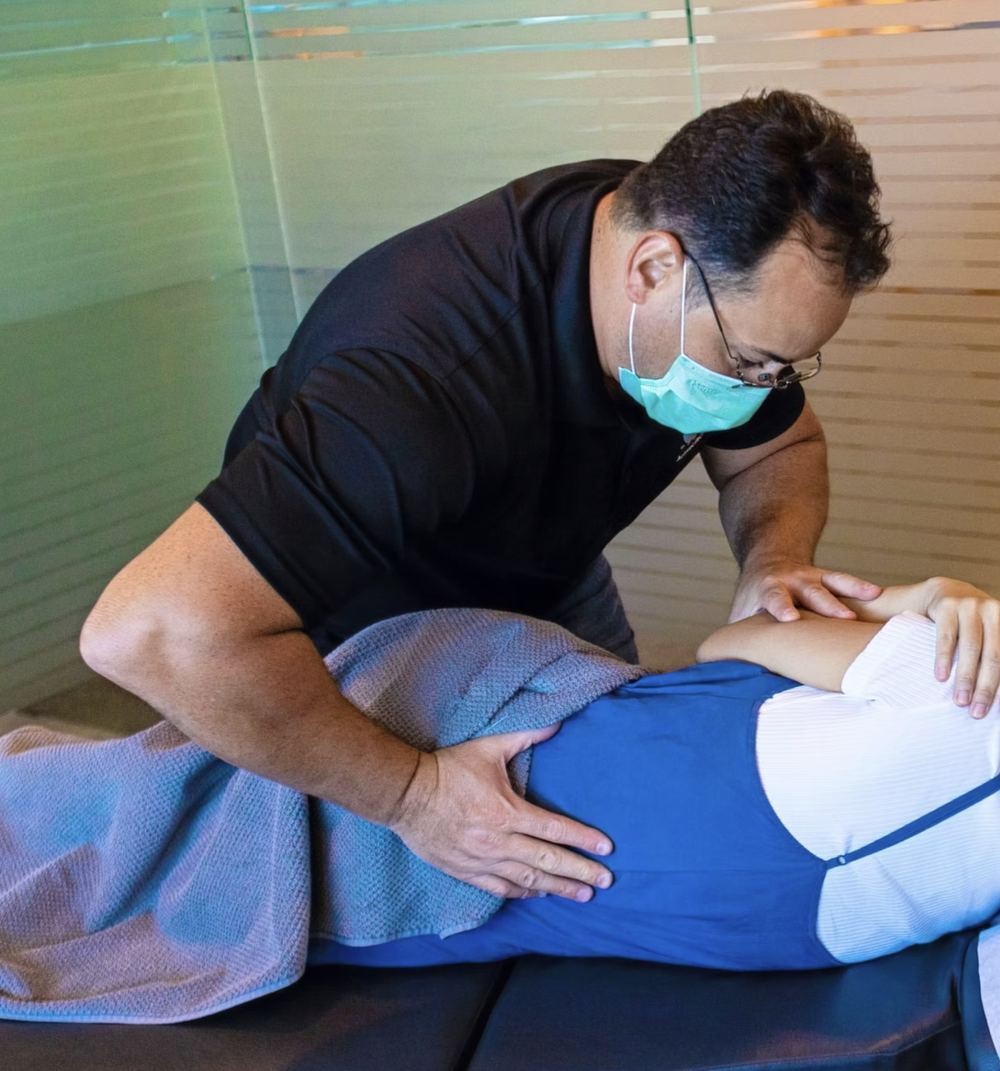
We first find where the pain is coming from. Treatment is then matched to you and may include gentle spinal adjustments, soft-tissue release, stretching and strengthening exercises, and practical advice on your workstation, sleep and lifting.
We explain what we find in plain language, how many sessions it is likely to take, and what you can do at home to speed things up.
How long recovery takes
Many people with recent (acute) pain feel a clear difference within the first few visits. Pain that has built up over months or years usually takes longer, and we focus on preventing it from coming back.
Your first visit
Your first consultation takes about 25 to 30 minutes and costs $180 before GST. We listen to your history, examine you, explain what we find and what we recommend, and you decide whether to start care. No referral is needed, and insurance claims are supported.
When to see a doctor urgently
Please see a medical doctor or go to A&E (or call 995 in an emergency) if you have:
- Back pain after a fall, accident or major injury
- Loss of bladder or bowel control, or numbness around the groin
- Pain with fever, unexplained weight loss or a history of cancer
- Increasing weakness in an arm or leg
Frequently asked questions
Do I need an X-ray before treatment?
Not always. Many cases can be assessed with a physical examination. If your history or examination suggests an X-ray or MRI would change your care, we will explain why first.
Is chiropractic adjustment painful?
Most people find adjustments comfortable. Some feel mild soreness for a day, similar to after exercise. We always use gentle or low-force techniques where they suit you better.
Should I rest or keep moving?
For most everyday back and neck pain, staying gently active helps more than bed rest. We will show you which movements are safe for you.
This page is general information, not a diagnosis. Everyone is different, so please speak to one of our doctors about your situation.